
After being diagnosed early with urothelial carcinoma at the age of 74, Ms. C's condition progressed rapidly, reaching mid-to-late stages in just a few months, urgently requiring new actionable evidence to guide treatment choices.
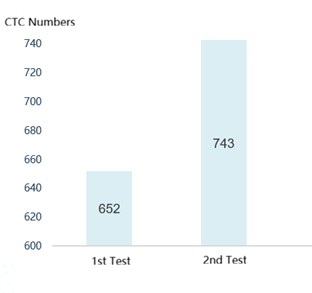
Ms. C then underwent a blood test for CTC (circulating tumor cell) detection. The first test showed 652 CTCs, consistent with clinical assessments of tumor activity, establishing a trust baseline. Two months later, a follow-up test showed an increase to 743 CTCs, consistent with clinical evidence of bone metastasis progression, indicating accelerated disease.
In this test, a simultaneous target analysis of CTCs was conducted, revealing a HER2-positive rate of 53.3%, providing a clear target basis to support Ms. C's HER2-related treatment.
.png)
Subsequently, the hospital reassessed Ms. C's medication, reducing the out-of-pocket cost of the drug from 7,600 yuan to 1,200 yuan. The CTC test results were accepted by both clinicians and the medical insurance system, lowering the accessibility threshold for treatment.
Case Summary
• Reliable quantification of disease activity was obtained from a 5ml blood sample, synchronized with imaging progression.
• The focus is not just on counting: it is possible to perform in vitro culture and target screening based on highly active CTCs, directly generating actionable evidence for drug decisions.
• The report can be incorporated into the hospital's medication assessment and medical insurance (Category A) review process, indicating that the results are clinically usable and compliant with trustworthiness standards.