
Suzhou Labyrinth Biotech & National University of Singapore Joint Symposium Concludes Successfully, Domestic Labyrinth CE01 Device Sparks Enthusiastic Discussion
On August 5, 2025, the international symposium titled "Label-Free Microfluidic System for Rare Circulating Tumor Cell Capture," jointly organized by Suzhou Labyrinth Biotech Co., Ltd. and the National University of Singapore (NUS), was successfully held at the Conference Centre of the NUS Yong Loo Lin School of Medicine. The symposium focused on breakthrough applications of label-free microfluidic technology in rare tumor cell capture, precision oncology, stem cell therapy, and in vitro fertilization and embryo transfer. The event attracted top scholars, industry leaders, and clinical experts from around the world, who gathered both online and offline to discuss technological innovation and the future of commercialization.
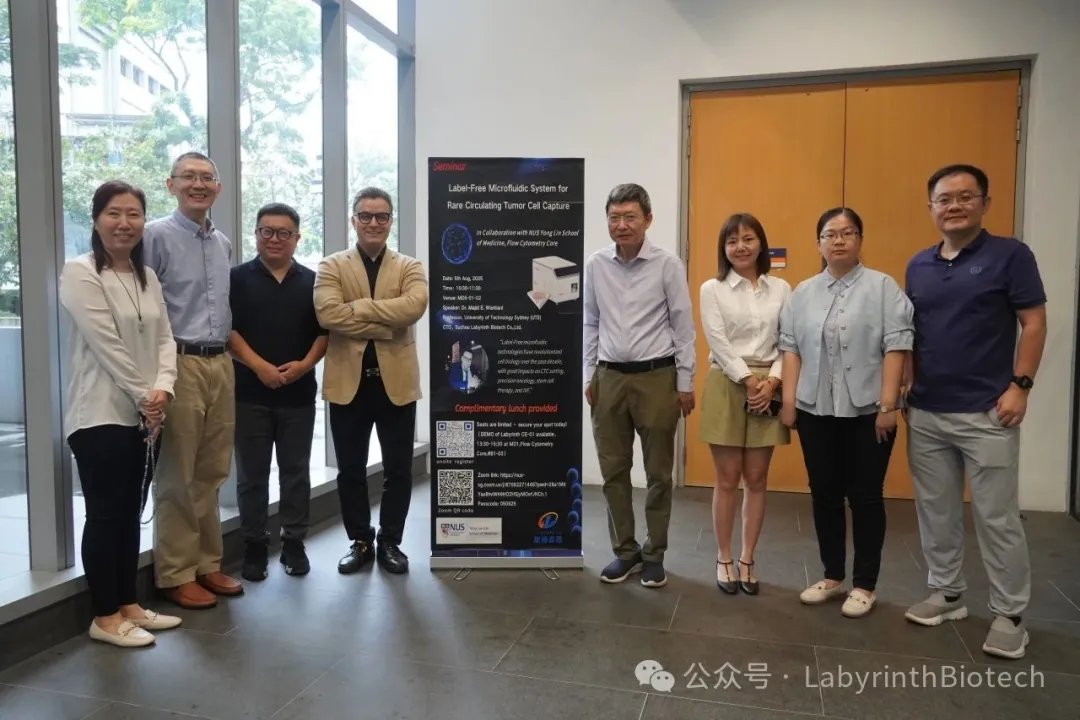
Opening Ceremony: Industry-Academia Collaboration Maps Out the Blueprint for Precision Medicine
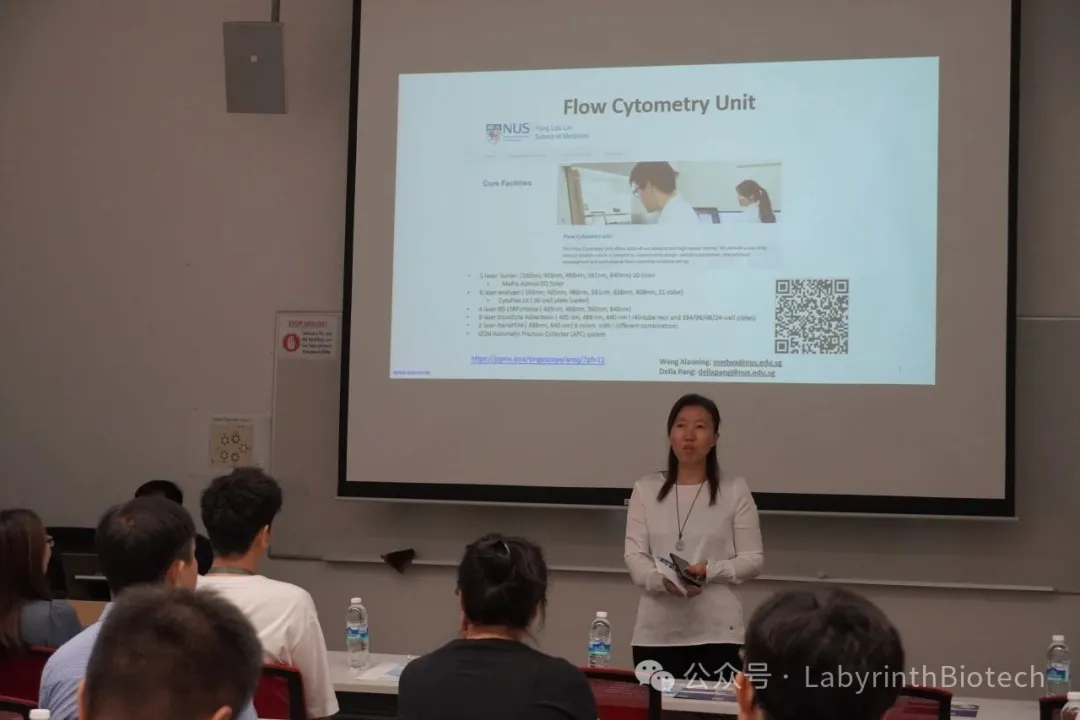
The international symposium officially began at 10:30 AM. Ms. Wang Xiaoning, Laboratory Manager at the NUS Yong Loo Lin School of Medicine, delivered the opening address, warmly welcoming all attendees and emphasizing the symposium's significance in advancing precision medicine technologies. Distinguished guests included Professor Hanry Yu of NUS, Mr. Willy Koh (CEO of Racer Technologies), the Chair of the Singapore Medtech Consortium, and several Principal Investigators (PIs) in clinical oncology. Numerous other scholars and experts participated online.
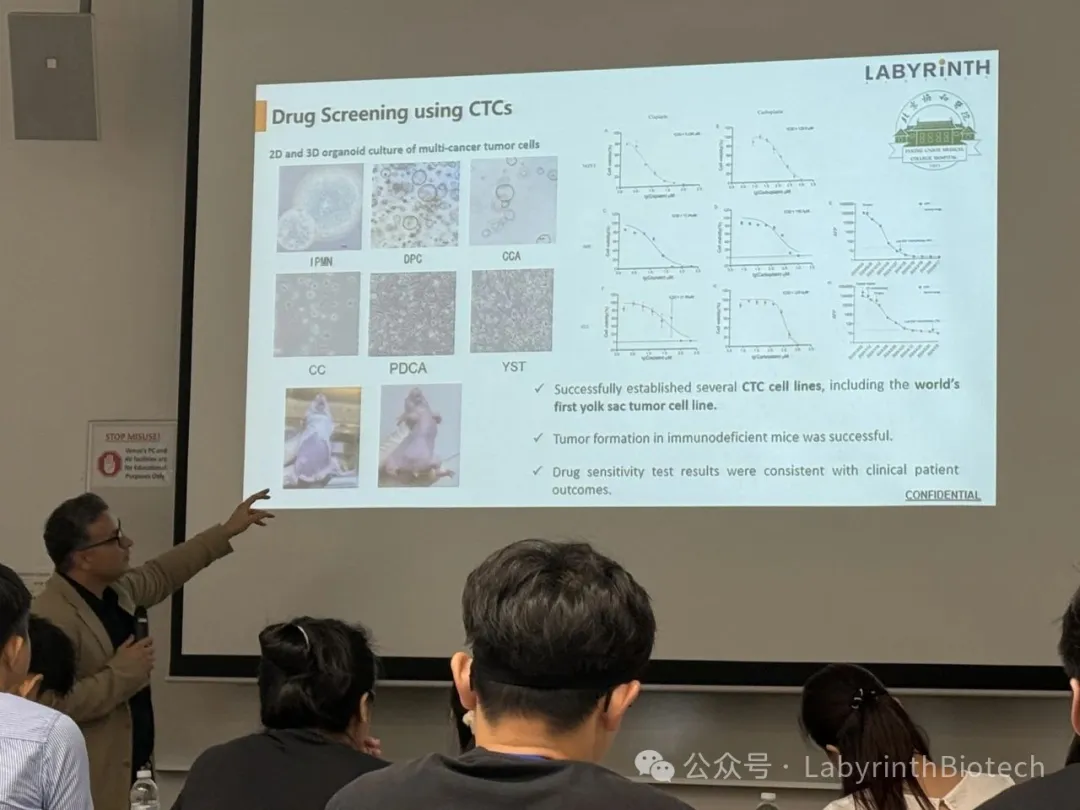
International Frontiers: How Label-Free Microfluidic Technology is Disrupting Cancer Diagnosis and Treatment
Professor Majid E. Warkiani (CTO of Suzhou Labyrinth Biotech) from the University of Technology Sydney presented on "Microengineered Systems for Cell Biology and Translational Applications," sharing the latest advances in Labyrinth's next-generation label-free rare cell capture technology:
-
Technological Breakthrough: The novel microfluidic chip uses physical properties to separate CTCs without labeling, avoiding cell damage.
-
New Clinical Value: Monitoring PD-1/PD-L1 interactions in CTCs reveals drug resistance mechanisms; detection of HER2+ CTCs offers new treatment opportunities for breast cancer patients with HER2-negative tissue biopsies.
-
Multi-omics Integration: Single-cell sequencing combined with spatial omics technologies drives precision medicine to greater depths.
-
IVF Application: Inertial microfluidics enables synchronous processing of oocytes/embryos, improving culture quality.
Following the presentation, a lively discussion ensued. Participating experts agreed that this technology will redefine the value of liquid biopsy in cancer diagnosis and treatment, and open new pathways for separating other rare cell populations and cell groups with size differences.
Rise of Domestic Capability: Live Demo of Labyrinth Cell Sorter Attracts Widespread Attention
Dr. Xue Liang, Vice President of R&D at Labyrinth Biotech, conducted a live hands-on demonstration of the domestically produced Labyrinth-CE01 cell sorter. The attending scholars and experts responded enthusiastically, engaging in in-depth discussions on technical details and application prospects.
-
Technical Validation: Multiple clinical experts and scholars highly recognized the device's high capture efficiency and cell viability preservation, with particular attention to its stable performance in circulating tumor cell (CTC) detection.
-
Industrialization Realization: Industry representatives showed strong interest in the device's low cost and high efficiency, and held pragmatic discussions with Dr. Xue Liang on mass production and international market expansion.
Following the device demonstration, many participating experts and scholars conducted in-depth exchanges with Dr. Xue Liang, discussing technical parameters, clinical application scenarios, and industrialization prospects. The on-site atmosphere was vibrant, and attendees gave high praise to the device's technological innovation and application potential. This interaction not only demonstrated confidence in domestic microfluidic technology from both academia and industry but also laid a solid foundation for future industry-academia-research collaboration.
Conclusion: Advancing Precision Medicine in the Name of Technology
The successful hosting of this symposium not only provided a premier platform for in-depth exchanges among global experts and scholars but also witnessed the direction of industrial application of label-free microfluidic technology in the field of precision cancer medicine.
Through interdisciplinary intellectual cross-pollination and deep industry-academia integration, this technology is opening a new chapter in precision medicine. As a major breakthrough in the precision medicine field, this technology is redefining the boundaries of disease diagnosis and treatment. Suzhou Labyrinth Biotech will continue to deepen technological innovation and international collaboration, leveraging "Intelligent Manufacturing in China" to drive the accessibility and affordability of global precision medicine.