
Ms. W, 41 years old, underwent early screening (including methylation marker testing) in early April, and the test results did not indicate any abnormalities. In mid-April, due to physical discomfort, she sought medical attention and was diagnosed with stage II cervical cancer. Surgery was scheduled for May. Preoperative blood tests detected a total of 303 CTCs. The surgery was very successful. Another blood test in June showed that the number of CTCs had decreased to 28. Compared to the anxious waiting after surgery, this kind of visible data monitoring provides greater reassurance to the patient and her family.
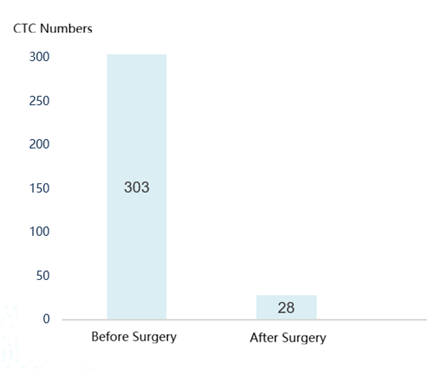
In cases where early screening methylation does not indicate abnormalities, CTC counts can still provide consistent quantitative signals for clinically diagnosed tumors.
• A clear numerical drop from preoperative to postoperative stages indicates that the test can be used for evaluating treatment efficacy and monitoring MRD trends.
• An executable follow-up strategy can be formed, using continuous CTC changes to replace postoperative anxious waiting, achieving quantifiable management.
• This facilitates health consulting companies to incorporate CTC into their high-end health management processes, with products that are implementable and can be integrated into service systems.